Okay, I have comprehensive and up-to-date information on Bajaj Auto, including their market position, recent launches, EV strategy, sustainability efforts, and global presence. I can now craft a detailed blog post.
Here’s the blog article:
Bajaj Auto: A Legacy of Innovation, Performance, and Global Reach
Excerpt: From setting benchmarks in the commuter segment to leading the electric revolution with Chetak, Bajaj Auto continues to redefine mobility. Explore how this Indian automotive giant balances its rich heritage with cutting-edge innovation and a strong global footprint.
Content:
Bajaj Auto, a name deeply embedded in the fabric of Indian mobility, has evolved significantly since its inception in 1945. What began as a trading company importing two and three-wheelers has transformed into a global automotive powerhouse, renowned for its diverse portfolio, engineering prowess, and strategic foresight. Today, Bajaj Auto stands as the world’s fourth-largest two- and three-wheeler manufacturer, and a major player in the electric vehicle (EV) space.
Dominating the Conventional Market with Strategic Launches
Bajaj Auto has consistently held a strong position in the domestic motorcycle market, currently being the second-largest player by volume with an 18.2% market share in FY24. Their success is built on a range of popular and segment-defining models:
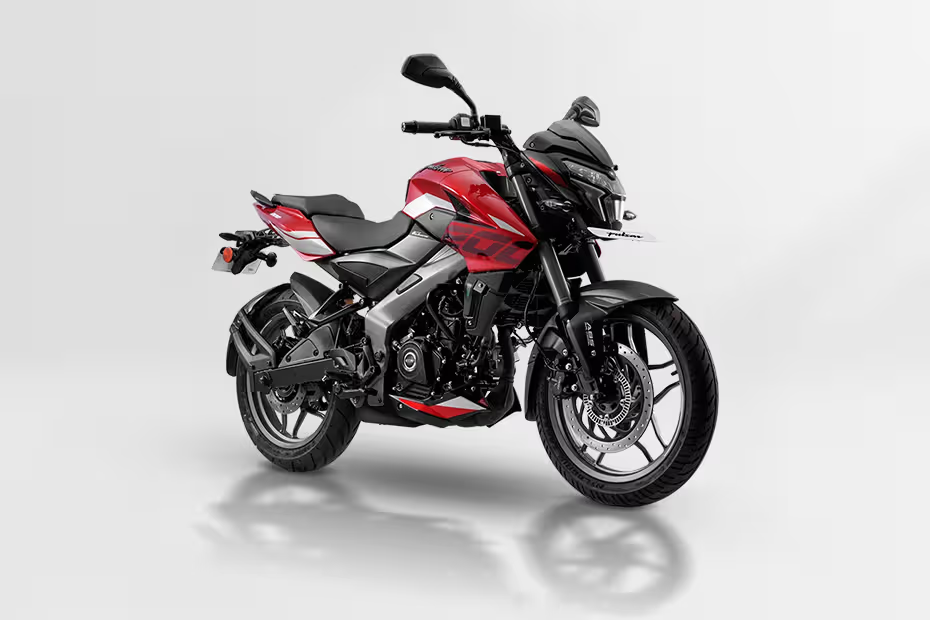
- The Pulsar Legacy: The Pulsar series remains a cornerstone of Bajaj’s success, known for its sporty appeal and strong performance. Recent launches like the Pulsar N160 (July 2025) and the Pulsar NS400Z (July 2025) demonstrate Bajaj’s commitment to keeping this iconic brand fresh and competitive. The Pulsar N160, for instance, offers variants with dual-channel ABS and USD forks, catering to evolving rider demands. The NS400Z, a powerful addition, reinforces their presence in the higher-performance segment.
- Commuter Kings: Models like the Platina and CT continue to be strong performers in the commuter segment, offering exceptional fuel efficiency and reliability, catering to the everyday needs of millions.
- The Dominar Series: With models like the Dominar 250 and Dominar 400, Bajaj has established a firm foothold in the premium touring motorcycle segment, offering power, comfort, and advanced features for enthusiasts.
Pioneering the Electric Revolution: The Chetak and Beyond
Bajaj Auto has been at the forefront of the electric two-wheeler transition in India. The re-imagined Bajaj Chetak electric scooter has been a game-changer, quickly becoming one of the best-selling electric scooters in the last quarter of FY25. Bajaj’s market share in electric two-wheelers nearly doubled from 11% in FY24 to 20% in FY25, a testament to the Chetak’s success.
The company is investing significantly in its EV future, allocating approximately ₹420 crores of its ₹700 crores capital expenditure for EV research, development, and new product launches. Beyond two-wheelers, Bajaj is also focusing on expanding its market leadership in the electric three-wheeler segment, with plans to launch a new e-rickshaw in July 2025 under a new brand, aiming to set new benchmarks in quality and range.
A Global Footprint and Strategic Alliances
Bajaj Auto’s ambitions extend far beyond the Indian market. It operates on a worldwide scale through 66 global distributors spread across 75 countries, making it India’s top exporter of consumer branded goods.
Strategic alliances have been key to Bajaj’s global expansion and technological advancement:
- KTM Partnership: Bajaj holds a significant stake in Austrian motorcycle manufacturer KTM, enabling them to bring high-performance racing bikes to India and leverage shared technological expertise. Bajaj is in the process of acquiring majority control of the KTM Group by May 2026, further solidifying this alliance.
- Triumph Collaboration: A partnership with British motorcycle company Triumph focuses on developing mid-capacity motorcycle engines for both domestic and international markets, creating exciting new products for a global audience.
Commitment to Sustainability and Social Responsibility
Beyond business growth, Bajaj Auto is deeply committed to corporate social responsibility (CSR) and sustainable practices. Their CSR initiatives focus on:
- Skilling and Education: Bajaj partners with universities and technical institutions to provide industry-ready skills to youth, particularly in STEM fields, aiming to bridge the gap between academia and industry.
- Water Conservation: Through the Bajaj Water Conservation Project, the company supports community-based watershed development and water stewardship programs in various regions.
- Integrated Quality of Life Projects: These initiatives aim to improve the quality of life in communities around Bajaj Auto’s facilities, focusing on health, livelihoods, and overall community development.
The Road Ahead
With a robust product pipeline, a strong focus on electric mobility, and an expanding global presence, Bajaj Auto is well-positioned for continued growth. Their consistent investment in R&D, strategic partnerships, and a deep commitment to social and environmental well-being ensure that Bajaj will remain a formidable force in the automotive industry, not just in India, but on the global stage.